Residencies

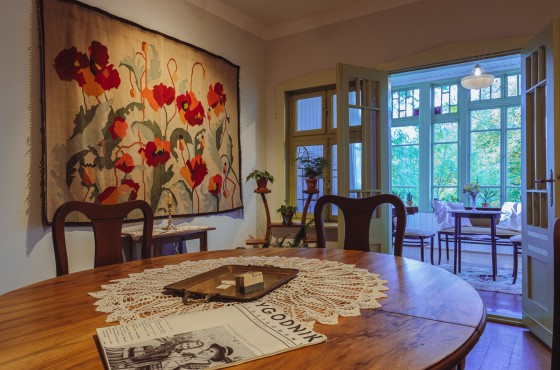
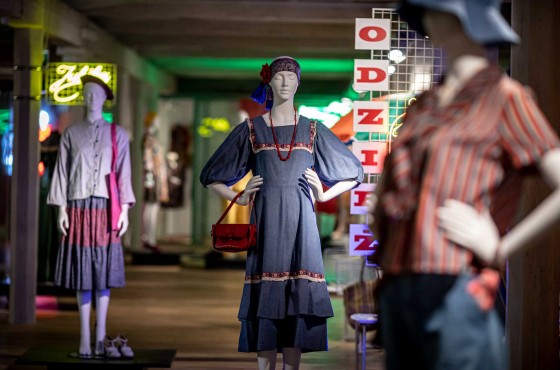
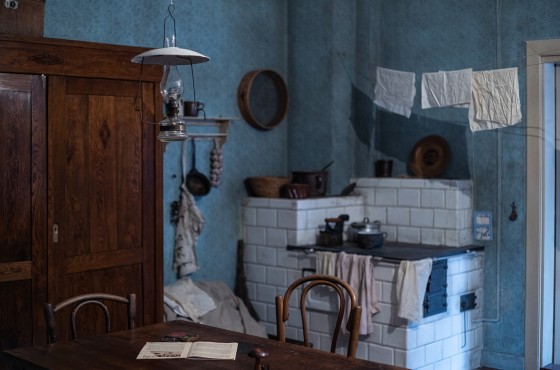
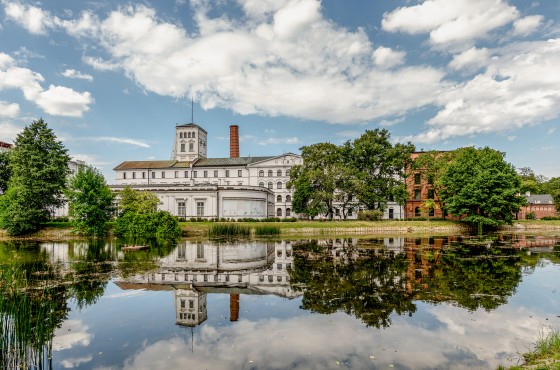
On June 13–18, 2022 participants in the Interweaving Structures: Fabric as Material, Method and Message project did an art and study residency in Łódź. The activities in the Łódź and Podlachia residency programs aimed to inspire the artists to create works for the exhibition, whose two editions, in Łódź and in Bergen, are planned for 2023. Podlachia and Łódź are also linked by textile and multi-ethnic traditions and the traditional double-weave textile, one of the world’s largest collections of which is at the Central Museum of Textiles in Łódź.
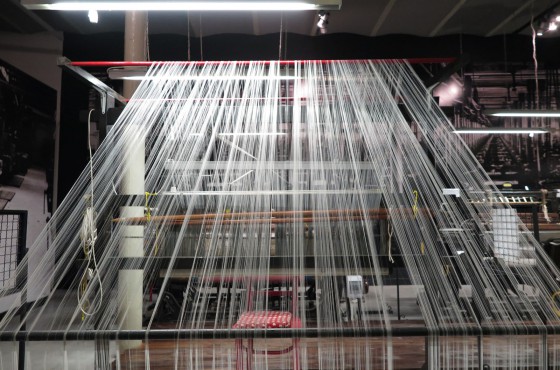
A premise of the Łódź residency was to show a range of the city’s connections with fabrics in the context of the textile industry, design, and art. Historically, this meant the rapid development of the town, named the Promised Land, in the nineteenth and twentieth centuries, a phenomenon unprecedented on a European scale. The town was shared by Polish, Russian, German, and Jewish settlers, a few of whom made great fortunes in industry, while the masses led modest lives as craftspeople, workers, often in extreme poverty. The residency program also showed the impact of the great textile industry on the mass unemployment, situation of women, and the city’s identity in the 1990s.
These and other historical, sociological, academic, scholarly, research, and artistic issues were explored through academic lectures and presentations, meetings with artists and experts, visits to museums, walks around Łódź’s historical sites attached to its multicultural industrial roots, visits to studios at the Academy of Fine Arts in Łódź and to exhibitions at the Central Museum of Textiles, which is preparing the seventeenth edition of the International Triennial of Tapestry.
Residency concept and moderation: Marcin Gawryszczak.
See the report and gallery from the residency in Lodz.
video by HaWa
The main protagonist of the residency in Podlachia in June 19–25, 2022 as part of the Art of Weaving: Textile as a Material, Method, and Medium project was the double-warp textile, its history, tradition, and original technique.
Following the Folk Crafts Trail past the artisans’ workshops in the “land of warp and weft,” the participants learned the history of Podlachia weaving and material culture at the Białystok borderlands. An important theme was the fates of several nationalities—Polish, Belarusian, Russian, Lithuanian, Ukrainian, Tartar, and Jewish—coexisting for centuries in these lands, sealed by the upheavals of wars, partitions, flight, border changes, and state belonging.
The multi-ethnic history of Podlachia was illustrated by visits to Supraśl, Tykocin, Bohoniki, several picturesque Podlachia villages, and the Podlachia Museum of Folk Culture in Wasilków. An important and inspiring experience was the visit to the Janów textile center, where textile traditions are very much alive and works are produced for competitions and exhibitions, as well as to decorate homes around the world.
Alongside these encounters with history and tradition, the Podlachia residency made room for contact with nature during a trip to the Biebrza National Park, a visit to the Arsenał contemporary art gallery for an exhibition by Kateryna Lysovenko addressing the present Russian attack on Ukraine, and walks through contemporary Białystok, exploring the city’s textile identity. As an important nineteenth-century cotton producing region, the Białystok Industrial Area is, like the Łódź region, stamped by the fall of the textile industry in the late twentieth century and the challenges of social transformations.
Residency concept and moderation: Magdalena Ziółkowska.
See the report and gallery from the residency in Podlachia.
video by HaWa
The participants in the Interweaving Structures: Fabric a Material, Method and Message project have taken part in another residency, the third to date. During their three-day trip to Oslo and Lillehammer (August 1–3) the invited guests—scholars in visual arts, specialists in historical textiles and material culture—addressed the subject of building a national identity, a “national” culture for Norway, and the role and significance of folk art within it.
At two permanent exhibitions—Impulses at the Maihaugen Muzeum in Lillehammer and Timescope at the Norsk Folkemuseum in Oslo—the project participants had a look at historical textiles, applied art, and national costumes, tracing their stylistic development and regional specificity. The guided tour around the town hall with Professor Jon Pettersen, a specialist in old textile reconstruction, was a chance to admire the textiles, the wall paintings, and the artisanry. Other guests during the residency were contemporary artists—Franz Petter Schmidt and Inger Johanne Rasmussen—whose practice draws from traditional materials, designs, and techniques.
Another important stop was the visit to the monographic exhibition of Synnove Anker Aurdal at the Astrup Fearnely Museum in Oslo, allowing us to trace the stylistic development of this true innovator of postwar textile art, who began working in the late 1940s, combining formal experimentation with the language of contemporary poetry.
See the report and gallery from the residency in Oslo.
The last residency (Bergen, August 4–10) with the participants in the Interwoven Structures: Textile as Material, Method, Medium project more sharply brought into focus the ties between historical designs, old weaving techniques, and contemporary production methods.
The history of akle (traditional comforters with a characteristic color-scheme and striped patterns) was presented by artist Marta Kløve Juuhl, while Kari Dyrdal, long-time textiles professor at the Art Department of the University of Bergen, spoke of the history of contemporary textile art in Norway, present not only in gallery institutions, but also in public buildings.
The visit to Utne, situated on the Hardanger fjords, home to the Folkemuseum, was another chance to see traditional embroidery, folk textiles, and traditions particular to this region. Then visiting Arne, not far from Bergen, the participants could compare the beginnings of the cotton industry in northern Norway with their experiences in Łódź and Białystok. One example of the rebirth of the industrialist tradition in this town is the Oleana family company, who have been producing women’s fashions in the spirit of sustainability since the 1990s.